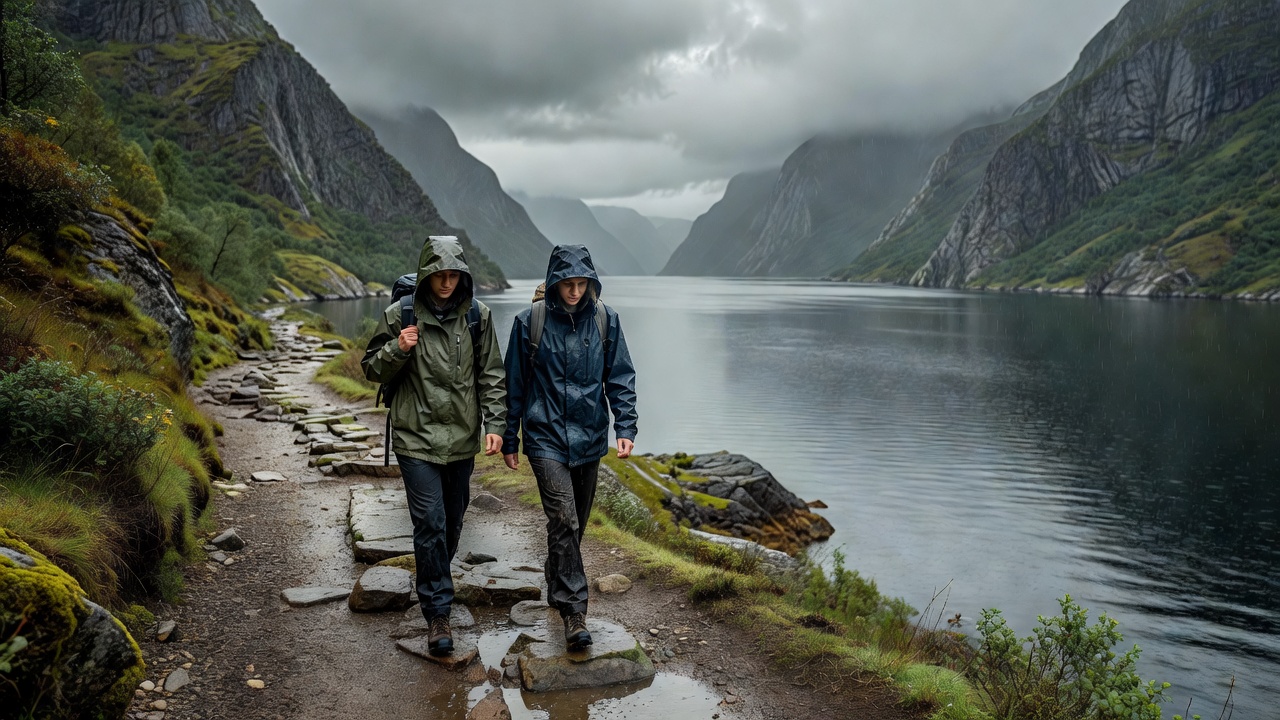
On a map, a short line beside the water can look reassuringly simple. On the ground, it may include wet stone, steps, traffic or a steep section hidden by the scale of the map. For a gentler day, think in terms of effort and consequences rather than kilometres. Can you stop comfortably? Can you return the same way? Will a change in weather leave you exposed?
This guide offers route-selection ideas, not turn-by-turn directions or verified accessibility assessments. Conditions can change after rainfall, maintenance or seasonal closures. Ask a local visitor office or your accommodation about the particular stretch you intend to use, then check signs when you arrive.
Check the route before choosing the view
- Surface: ask whether the entire stretch is paved, gravel, grass, boardwalk or rough trail.
- Gradient: look for climbs, cross-slopes and steps, including those at the start.
- Exposure: consider wind, unguarded water edges, falling-rock signs and places with no shelter.
- Return: confirm whether you can turn back freely or depend on a boat, bus or gate opening.
- Rest: check for seats, toilets and somewhere dry; do not assume facilities are open.
If you use a wheelchair, walking aid or pushchair, a description such as “easy” is not enough. Request details about width, surface firmness, barriers and gradients. Photographs of the approach and any pinch points can be more useful than a general assurance. Accessibility needs vary, so assess the information against your own requirements.
Start with a village waterfront
A public waterfront in a village such as Aurland, Ulvik or Norheimsund can be a sensible place to investigate a short outing. It may allow you to stay near food and return to your room without another transfer. This does not mean every section is level, pedestrian-only or suitable for every mobility need. Inspect the immediate route before committing to it.
Choose a visible turning point rather than an ambitious destination: a public seating area, a small harbour section or the end of a comfortable pavement. Stay clear of working quays, private jetties and vehicle access. Where a road has no safe pedestrian provision, choose another route rather than assuming drivers will make space.
Approach famous paths without obligation
The Aurland area is associated with the Aurlandsdalen valley route, and the Hardanger region with demanding outings such as Trolltunga and Dronningstien. Their reputation does not make them necessary additions to a restorative break. Mountain routes involve different preparation, terrain and consequences from a village stroll. Do not convert a wish for gentle time outdoors into a challenge you did not want.
If a recognised trail interests you, consult current route descriptions through UT.no and local advice. Examine the full route, not just the headline distance or an appealing photograph. A short section of a longer path is only an appropriate alternative if access, terrain and turning space are suitable in their own right.
Let weather shorten the day
Rain changes grip, visibility and comfort. Strong wind can make an exposed shoreline unpleasant or unsafe, and snow or ice can remain where you did not expect it. Check Yr for the local forecast and Varsom for relevant natural-hazard information. Forecasts are inputs to a decision, not guarantees that a route is safe.
Wear footwear suited to the actual surface, carry an additional warm layer and protect essentials from rain. For anything beyond a brief local outing, take the equipment appropriate to the conditions and make sure someone knows your plan. Mobile coverage and battery life should never be your only return strategy.
A turning point is a successful outcome
Decide before setting out what would make you turn back: increasing wind, discomfort, poor grip or simply having had enough. An out-and-back walk makes that choice easier because the return is familiar, though it still requires enough energy and daylight. Stop before fatigue turns an ordinary return into a difficult one.
Walking with someone else can add companionship, but agree that either person may shorten the outing without needing to justify it. If your interests differ, meet later in a safe, agreed place rather than letting the faster person's pace define the whole day.
Walk lightly through everyday places
Norway's right to roam comes with responsibilities and does not mean unrestricted access everywhere. Respect cultivated land, gardens, closures and local signs. Keep an appropriate distance from homes, carry litter out and follow applicable dog-control rules. Avoid stepping onto fragile vegetation or moving closer to wildlife for a photograph.
At the end, notice what made the outing manageable. Perhaps it was a nearby café, a familiar return or the decision not to extend the route. Those details are useful for tomorrow. The distance itself can remain uncounted.